
Cellulite Treatment in Doha, Qatar: A Complete Guide to Avéli, Skin Tightening, Mesotherapy, Liposuction and Combination Treatments
Comprehensive patient guide | Dr Ali Soueid | Cosmetic Aesthetic Plastic Surgery, Doha
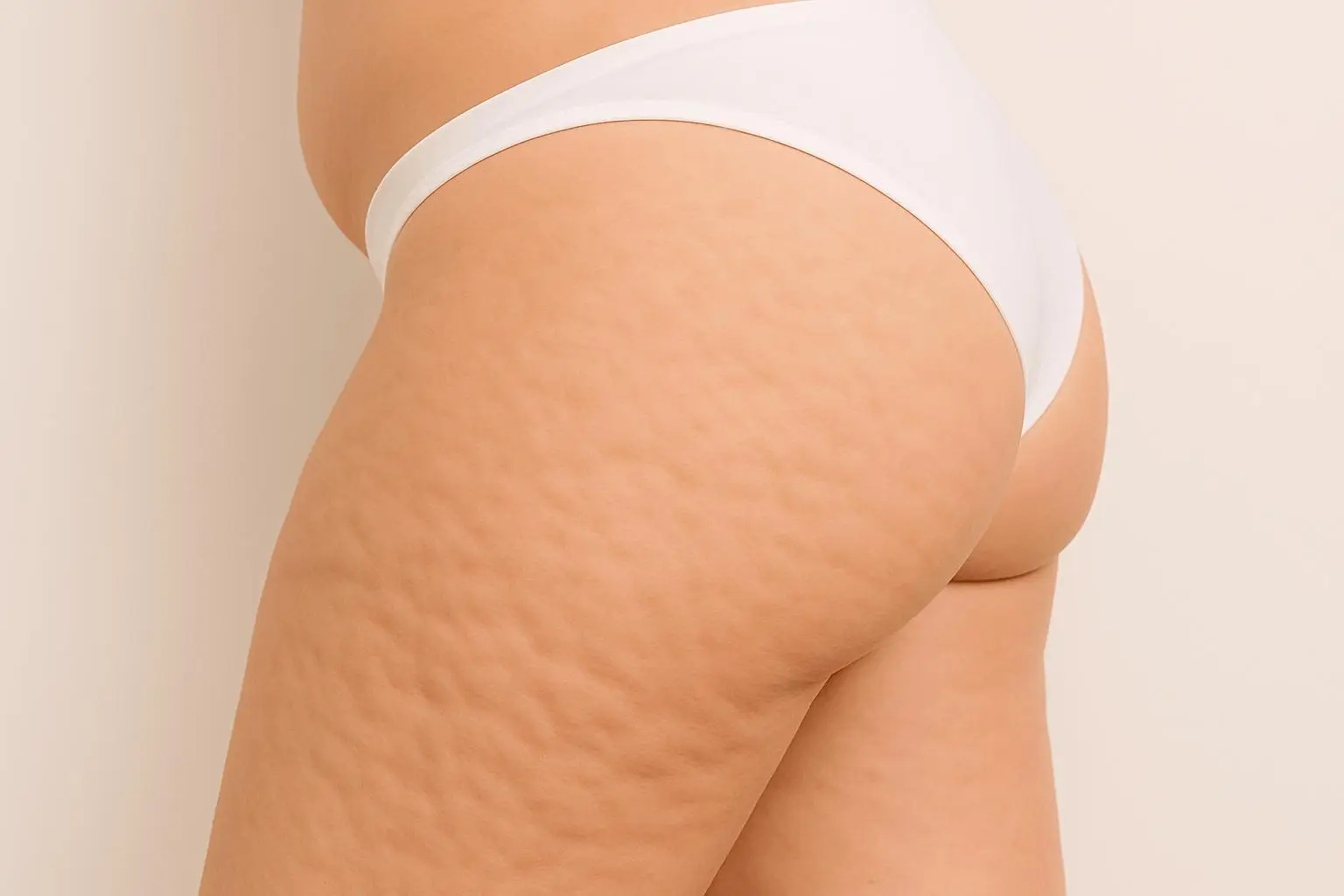
Cellulite is one of the most common aesthetic concerns affecting women, regardless of age, weight or fitness level. It can appear on the thighs, buttocks, hips and occasionally the abdomen, creating the characteristic dimpling, puckering or uneven appearance often described as orange-peel skin.
Despite its prevalence, cellulite remains widely misunderstood. Many treatments promise smoother skin, but their effectiveness varies because cellulite is not simply excess fat. It involves complex interactions between fibrous connective tissue bands, superficial fat, skin thickness, tissue laxity and individual anatomy.
Modern cellulite treatment has moved beyond creams, massage and con
For patients considering cellulite treatment in Doha, Qatar, the most effective strategy is often not a single treatment but an individualised plan addressing the underlying cause of each visible irregularity.
This guide explains the science behind cellulite, compares available treatments, explores Avéli in detail and outlines how different procedures can be combined safely to optimise results.
1. Understanding cellulite: why does it develop?


Cellulite develops when the architecture of the skin and underlying fat produces visible surface depressions and elevations. The most important anatomical structures are the fibrous septae: connective tissue bands that connect the deeper fascia to the underside of the skin.
These bands help stabilise the skin. However, some can create points of tethering, pulling the skin inward while adjacent fatty tissue protrudes around them.
This produces the characteristic dimpled appearance.
The five components of cellulite
| Component | What happens | Potential treatment |
|---|---|---|
| Fibrous septae | Bands tether the skin, producing distinct dimples | Avéli or selected subcision techniques |
| Superficial fat | Fat compartments contribute to surface bulging | Selective contouring where appropriate |
| Skin laxity | Reduced support makes irregularities more visible | Radiofrequency or other skin tightening |
| Skin quality | Thin, crepey or photodamaged skin accentuates unevenness | Selected resurfacing, microneedling or biostimulatory treatments |
| Tissue architecture | Genetics, hormones and connective tissue patterns influence appearance | Individualised combination treatment |
The key clinical principle: A treatment that reduces fat will not necessarily release a tethered dimple. Equally, releasing fibrous bands will not correct substantial skin laxity or excess fat.
2. Why is cellulite so common in women?
Cellulite affects the great majority of adult women to some degree. It can occur in women who are slim, athletic or otherwise have very little excess body fat.
Several factors contribute.
Female connective tissue anatomy
The arrangement of fibrous septae and superficial fat differs between individuals and, on average, between women and men. These anatomical differences help explain why cellulite is much more common in women.
Hormonal influences
Oestrogen and other hormonal factors influence fat distribution, connective tissue and skin characteristics. Cellulite can become more noticeable around puberty, pregnancy and other periods of hormonal change.
Genetics
Inherited differences in skin thickness, fat distribution and connective tissue structure can influence susceptibility.
Ageing and collagen changes
As the skin becomes thinner and less elastic, existing dimples may become more visible. This is why cellulite and skin laxity often coexist, particularly around the buttocks and posterior thighs.
Weight fluctuations
Weight gain can increase the prominence of fat-related bulging, while substantial weight loss can leave loose skin that accentuates surface irregularities.
Neither gaining nor losing weight reliably eliminates cellulite.
3. Cellulite vs loose skin vs localised fat: why diagnosis matters

CelluliteDistinct depressions caused partly by fibrous tethering

Skin laxityLoose or crepey skin with reduced elasticity

Localised fatFullness or bulging without necessarily having tethered dimples
These three concerns frequently overlap, but they require different treatment strategies.
A patient with a few well-defined cellulite depressions and good skin elasticity may be suitable for Avéli alone.
Another patient with cellulite, loose skin and localised fat deposits may benefit from a staged combination of treatments.
This distinction is particularly important when evaluating the role of liposuction. Liposuction can improve body contour, but it is not a primary cellulite treatment and may make dimpling more noticeable in some patients.
4. Avéli cellulite treatment in Doha: a targeted approach to fibrous bands


What is Avéli?
Avéli is a minimally invasive procedure designed to release the fibrous connective tissue bands responsible for distinct cellulite dimples on the buttocks and thighs.
It uses a technique called targeted verifiable subcision.
Unlike treatments that aim primarily to tighten skin or reduce fat, Avéli directly addresses one of the principal structural causes of cellulite: fibrous septal tethering.
The device has US FDA clearance for long-term reduction in the appearance of cellulite in the buttocks and thighs of adult women, supported by clinical follow-up through one year.
How does Avéli work?
The Avéli treatment mechanism
Original simplified schematic of fibrous band release. Not to scale; it does not depict the actual Avéli instrument or guarantee complete smoothing.
The procedure involves several stages.
- Assessment and marking: Visible cellulite dimples are examined and marked, typically with the patient standing so the depressions can be identified accurately.
- Local anaesthesia: The treatment area is anaesthetised to improve comfort.
- Identification of the fibrous bands: The instrument is introduced beneath the skin through a small entry point. Its mechanism allows the operator to engage bands contributing to a depression.
- Targeted release: The implicated septae are divided to reduce their tethering effect.
- Verification: The operator can reassess whether the contributing band has been adequately released before moving to the next dimple.
This ability to identify and verify release distinguishes Avéli from less targeted forms of subcision.
How effective is Avéli?
The multicentre CONFFIRM study evaluated a single Avéli treatment for cellulite on the buttocks and thighs, with assessments at three, six and twelve months.
The study demonstrated clinically assessed improvement maintained through twelve months in treated patients. However, it was a single-arm study rather than a direct comparison with sham treatment or other cellulite devices. Longer-term outcomes beyond the studied period remain less certain.
Who is a good candidate for Avéli?
Avéli may be particularly suitable for adult women who have:
- Distinct, visible cellulite dimples on the buttocks or thighs.
- Depressions associated with fibrous tethering.
- Relatively stable body weight.
- Realistic expectations about improvement.
- Sufficient skin quality to benefit from focal band release.
- A preference for targeted treatment rather than repeated temporary therapies.
Patients with substantial loose skin, diffuse crepiness, prominent fat deposits or irregularities caused by previous surgery may need a different or combined approach.
What Avéli cannot do
Avéli is not a weight-loss procedure, a substitute for liposuction or a generalised skin-tightening treatment.
It does not reliably correct every visible skin irregularity. Untreated bands, skin laxity, fat-related contour changes or newly developing cellulite can still produce dimpling.
Avéli recovery and aftercare
Bruising, swelling, tenderness and temporary firmness are common following subcision procedures. Some patients also experience numbness, temporary contour irregularity or small entry-site marks.
Patients should receive individualised instructions regarding compression, exercise, wound care and return to normal activities. Visible bruising can last longer than the period needed to resume light activities.
Less common complications include bleeding, haematoma, infection, persistent discomfort, prolonged sensory change, pigmentation change and unsatisfactory contour.
5. Comparing the available cellulite treatments
| Treatment | Main target | Role in a comprehensive plan | Evidence and limitations |
|---|---|---|---|
| Avéli | Fibrous septal bands | Primary treatment for defined dimples | Clinical improvement demonstrated through 12 months |
| Traditional subcision | Fibrous bands | Alternative focal release | Evidence supports improvement; precision and technique vary |
| Radiofrequency skin tightening | Skin laxity and collagen remodelling | Adjunct when skin is loose or crepey | Modest improvement; often requires multiple treatments |
| RF microneedling | Dermal texture and remodelling | Selected adjunct for skin quality | Direct cellulite evidence is less established |
| Acoustic wave therapy | Tissue mechanical stimulation | Non-invasive adjunct | Some supportive studies; maintenance may be necessary |
| Mesotherapy | Variable, depending on injected substances | Not routinely recommended | Limited reliable evidence; injection-related risks |
| Biostimulatory injectables | Selected skin-quality or contour concerns | Specialist, individualised adjunct | Evidence is evolving; not equivalent to band release |
| Liposuction | Localised fat | Contouring when excess fat coexists | Does not treat cellulite and may worsen dimpling |
| Fat grafting | Selected depressions or volume deficiency | Corrective adjunct in selected cases | Variable fat retention; not standard treatment for all cellulite |
| Exercise and weight stability | Muscle tone and body composition | Long-term supportive care | May improve appearance but does not sever fibrous bands |
Clinical reviews support selecting treatments according to the dominant anatomical problem rather than using a single modality for every patient.
6. Skin tightening devices: where do they fit?


Skin laxity can make cellulite more noticeable even when the primary fibrous bands have been successfully released.
This is particularly relevant after pregnancy, significant weight loss or with age-related changes in collagen and elastin.
Radiofrequency skin tightening
Radiofrequency devices deliver controlled thermal energy to tissues, aiming to stimulate collagen remodelling and improve firmness.
Some systems also target superficial adipose tissue.
Depending on the device, treatment may involve external electrodes, microneedles or minimally invasive subdermal probes.
Radiofrequency has supportive evidence for improvement in cellulite appearance, although results vary between devices and protocols.
Morpheus8 Body and radiofrequency microneedling
RF microneedling may be considered when the skin is thin, crepey or texturally irregular.
It combines needle penetration with radiofrequency energy to create controlled thermal injury at selected depths.
Potential objectives include improving skin firmness and texture. However, RF microneedling should not be described as a replacement for Avéli in treating a distinct, tethered cellulite depression.
Aggressive treatment in an area with limited subcutaneous fat may cause unwanted fat loss or contour irregularity. Device selection, depth and energy settings are therefore particularly important.
External skin tightening versus invasive tightening
Patients with mild laxity may be suitable for non-invasive treatments.
More significant laxity may require a different strategy, potentially including minimally invasive tightening or surgical body contouring.
There is no reason to recommend a more invasive treatment when the patient’s problem is limited to a few tethered dimples.
7. Mesotherapy for cellulite: can injections improve the result?
Mesotherapy involves placing small quantities of substances into or beneath the skin. Formulations may include vitamins, amino acids, caffeine, hyaluronic acid or other compounds.
It is frequently advertised for cellulite, localised fat and skin rejuvenation.
However, mesotherapy is not a proven primary treatment for cellulite. Formulations are highly variable, protocols are poorly standardised and high-quality evidence is insufficient to establish reliable efficacy.
The American Academy of Dermatology notes that evidence for mesotherapy is limited and that adverse effects can include swelling, infection, nodules, allergic reactions and skin changes.
Should mesotherapy be combined with Avéli?
Not routinely.
For a patient with clearly defined cellulite dimples, adding mesotherapy does not have established evidence of improving Avéli outcomes.
Selected injectable treatments may be considered separately for a specific, independently diagnosed skin-quality concern, but this should not be presented as a standard Avéli enhancement protocol.
If injections are used, they should be evidence-informed, comply with local regulatory requirements and be separated from the healing phase of subcision. The injection site, product, indication and risk of inflammation or infection must all be considered.
8. Can liposuction improve cellulite?


Liposuction is effective for removing selected deposits of subcutaneous fat and reshaping body contours.
However, cellulite is primarily a problem of skin-surface architecture, not simply fat volume.
Removing fat without addressing tethering can sometimes make depressions more noticeable. Overly aggressive superficial liposuction can also produce additional contour irregularities.
The American Academy of Dermatology specifically cautions that liposuction is not recommended as a treatment for cellulite itself.
When can liposuction be helpful?
It may be considered when the patient has both:
- Defined cellulite dimples requiring focal treatment.
- Separate, clinically significant fat deposits that distort the overall thigh or hip contour.
In this situation, liposuction is performed for body contouring, while Avéli or another subcision technique addresses the tethered dimples.
These interventions should be planned together anatomically, but not necessarily performed during the same session.
Should Avéli and liposuction be performed together?
A combined approach is technically possible in selected patients, and published clinical experience describes incorporating targeted subcision into broader lower-body rejuvenation strategies. However, the optimal sequence, timing and safety of every combination have not been established by high-quality comparative trials.
For many patients, staging is a more cautious strategy because liposuction can alter tissue thickness, swelling and the visibility of cellulite depressions.
9. A personalised cellulite treatment protocol: combining Avéli with other procedures
The most useful way to plan treatment is to identify the primary cause of the patient’s concern and then select complementary treatments only where they address a separate problem.
The following is a proposed clinical framework, not a validated universal protocol. Exact treatment intervals must follow device instructions, healing, patient assessment and the surgeon’s judgement.
Combination cellulite treatment pathway
- Stage 1 — Comprehensive assessmentStanding examination, standardised photographs, cellulite severity grading, skin laxity assessment, fat distribution and identification of individual tethered depressions.
- Stage 2 — Address significant contour problems, if presentIf localised fat or major skin laxity dominates, plan contouring or skin-tightening treatment first, where appropriate. Allow tissues to stabilise before reassessing dimples.
- Stage 3 — Avéli targeted releaseTreat suitable fibrous cellulite bands on the buttocks and thighs, with appropriate anaesthesia, marking and postoperative care.
- Stage 4 — Healing and reassessmentAllow swelling, bruising and inflammation to resolve. Review remaining irregularities rather than assuming every residual depression requires another procedure.
- Stage 5 — Selective adjunctive treatmentConsider radiofrequency or RF microneedling for persistent laxity or texture concerns. Use injections or fat grafting only for a clear separate indication, not as routine additions.
- Stage 6 — Long-term maintenanceStable weight, resistance training, appropriate skincare, and review photographs at approximately three, six and twelve months when clinically useful.
Protocol A: Predominantly fibrous cellulite
Typical patient: A woman with visible buttock or posterior-thigh dimples, relatively good skin elasticity and no substantial excess fat.
Recommended approach: targeted Avéli treatment followed by recovery and reassessment.
Routine mesotherapy, liposuction or aggressive skin tightening is unlikely to add value in a patient without those separate problems.
Protocol B: Cellulite with mild-to-moderate skin laxity
Typical patient: A woman with tethered dimples and a mildly loose or crepey skin envelope.
Recommended approach: Avéli for the defined dimples, with appropriately staged radiofrequency or RF microneedling for skin quality and laxity.
The order and interval should depend on tissue condition and treatment intensity. There is insufficient evidence to prescribe one optimal combination schedule for all patients.
Protocol C: Cellulite with localised fat deposits
Typical patient: A woman with cellulite and significant outer-thigh fullness or another discrete fat deposit.
Recommended approach: evaluate conservative liposuction or another suitable contouring procedure for the fat, followed by reassessment of residual cellulite. Avéli can then be considered for remaining tethered dimples.
The goal is not aggressive fat removal. Preserving a smooth, adequately supported skin envelope is essential.
Protocol D: Cellulite after major weight loss
Typical patient: A woman with dimpling, loose skin and reduced tissue support following substantial weight loss.
Recommended approach: first determine whether the main problem is skin excess, tissue deflation or focal tethering.
Patients with substantial skin redundancy may benefit more from surgical skin excision or body lifting than repeated energy-based treatments. Avéli can be considered for persistent discrete dimples when appropriate.
Protocol E: Mild cellulite in a patient who does not want a procedure
Typical patient: A woman with mild cellulite who prefers non-invasive options.
Recommended approach: discuss the limited but potentially useful effects of exercise, weight stability, selected radiofrequency or acoustic wave treatments and topical skincare.
Explain that improvements may be modest or temporary and that no non-invasive treatment can reliably eliminate all cellulite.
10. What about combining Avéli, mesotherapy, Morpheus8 and liposuction in one package?
Although offering all these treatments together may sound comprehensive, more treatment does not automatically produce a better result.
A combination package should not be the starting point. The starting point should be diagnosis.
For example, a patient with three discrete fibrous depressions does not necessarily benefit from liposuction, mesotherapy or RF microneedling.
Likewise, a patient whose primary problem is significant loose skin is unlikely to achieve satisfactory improvement through band release alone.
The purpose of combination treatment is to address distinct anatomical problems without introducing unnecessary cost, downtime or risk.
11. Risks of combination cellulite treatments
Every additional procedure introduces potential adverse effects.
These may include bruising, infection, swelling, pigmentation changes, contour irregularities, burns or scarring from energy-based devices, nodules or reactions from injectables, and prolonged sensory changes following invasive treatment.
Combining procedures can also make it harder to determine which intervention caused a complication or produced a benefit.
Patients should therefore receive a separate explanation of the indication, expected benefit, alternatives and risks of each component of their treatment plan.
12. What results should patients realistically expect?
Successful cellulite treatment generally means reducing the depth, number or visibility of dimples, not creating perfectly smooth skin under every lighting condition or body position.
Results can also vary with posture, muscle contraction, weight change, swelling and skin quality.
Avéli has demonstrated sustained improvement through one year in clinical research. Other treatments, especially non-invasive modalities, may require repeated sessions or maintenance.
For meaningful before-and-after assessment, photographs should be taken using consistent lighting, positioning, distance and muscle relaxation.
13. Why choose Dr Ali Soueid for cellulite treatment in Doha?
Dr Ali Soueid is a UK-trained Consultant Plastic Surgeon with more than 25 years of medical and surgical experience.
At Cosmetic Aesthetic Plastic Surgery in Doha, the objective of cellulite treatment is to assess the entire anatomical problem rather than recommend a single technology to every patient.
This includes evaluating fibrous tethering, skin quality, localised fat, body contour and the potential role of surgical or non-surgical treatments.
Avéli offers a targeted approach to cellulite caused by fibrous septae. Where additional concerns are present, complementary procedures may be considered according to their indications, evidence and risk profile.
The emphasis is on realistic expectations, proportionate treatment and natural-looking body contouring.
14. Frequently asked questions about cellulite treatment in Qatar
Is Avéli the best treatment for cellulite?
Avéli is a strong option for appropriately selected patients with distinct cellulite dimples caused by fibrous bands. It is not necessarily the best option for diffuse skin laxity, fat deposits or every type of surface irregularity.
Is Avéli available in Doha?
Patients should confirm current device availability, operator training and treatment suitability directly with their chosen clinic. US FDA clearance does not by itself establish local availability or regulatory status in Qatar.
Is cellulite caused by being overweight?
No. Cellulite is common in slim and athletic women. Fat distribution can influence its appearance, but connective tissue anatomy is central to its development.
Can Avéli permanently remove cellulite?
Avéli has clinical evidence supporting improvement through twelve months. This does not establish permanent elimination of cellulite, and other dimples may remain or develop.
Does Avéli remove fat?
No. Avéli releases selected connective tissue bands rather than removing significant quantities of fat.
Can liposuction remove cellulite?
Not reliably. Liposuction treats fat deposits and may make cellulite more visible in some patients.
Is Morpheus8 better than Avéli?
Neither is universally better. Morpheus8 addresses tissue remodelling and skin quality, whereas Avéli directly releases selected fibrous bands.
Can I have Avéli and Morpheus8 together?
They may be considered as part of a staged treatment plan if the patient has both tethered dimples and skin laxity. The safety and benefit of the exact combination should be assessed individually.
Does mesotherapy dissolve cellulite?
There is insufficient reliable evidence to support mesotherapy as a consistently effective cellulite treatment. Its effectiveness depends on the injected substances, and adverse effects are possible.
Can Avéli treat cellulite on the abdomen?
Its US FDA-cleared indication covers cellulite on the buttocks and thighs of adult women. Treatment elsewhere would require separate clinical and regulatory consideration.
How many Avéli sessions are needed?
Avéli is designed to treat selected dimples during a single procedure. Whether additional treatment is appropriate depends on the result and any remaining anatomical concerns.
Is Avéli painful?
Local anaesthesia is used. Patients may experience pressure or discomfort during treatment and tenderness afterward.
How long does bruising last after Avéli?
Bruising varies between patients and can remain visible for several weeks. Recovery instructions should be individualised.
Can Avéli be combined with fat transfer?
Potentially, in selected reconstructive or contour-correction situations. There is not enough evidence to recommend routine fat transfer with Avéli for all patients.
Is cellulite treatment suitable for darker skin?
Skin tone alone does not determine suitability, but pigmentation risk and device settings are particularly important when considering energy-based treatments. A clinical assessment is essential.
Can exercise remove cellulite?
Exercise can improve muscle tone, body composition and overall contour, but it does not directly release the fibrous septae responsible for defined cellulite dimples.
Will cellulite return after pregnancy or weight changes?
Skin and fat distribution can change after pregnancy or substantial weight fluctuation. Even if previously treated dimples improve, new irregularities can develop.
What is the difference between cellulite and stretch marks?
Cellulite involves surface dimpling related to underlying tissue architecture. Stretch marks are dermal scars caused by changes in the skin’s connective tissue during stretching.
Can cellulite treatment be combined with a thigh lift?
In selected patients, cellulite treatment may complement body-contouring surgery, but substantial loose skin often requires correction of the skin envelope first.
How much does cellulite treatment cost in Doha?
Cost depends on the number and distribution of dimples, the treatment selected, anaesthesia, facility requirements and whether complementary procedures are clinically indicated. A personalised quotation should follow consultation.
15. Final thoughts: the future of cellulite treatment in Qatar
Cellulite is a complex structural condition, which explains why so many traditional treatments produce inconsistent results.
Avéli represents an important advance because it targets the fibrous bands responsible for selected cellulite depressions rather than simply attempting to reduce fat or temporarily improve circulation.
However, the best results require careful patient selection and recognition of other contributing factors.
For patients in Doha considering cellulite treatment, a comprehensive assessment should establish whether the primary concern is fibrous tethering, skin laxity, fat distribution or a combination.
The most appropriate plan may involve Avéli alone or a carefully staged combination of procedures.
The objective is not to perform the greatest number of treatments, but to select the smallest number of appropriate interventions needed to achieve meaningful improvement.